
The door is the security model now
On extended access the entrance has to latch and lock reliably with nobody present. A closer that no longer pulls the door shut is an open building overnight, regardless of how good the access control is.
Gyms
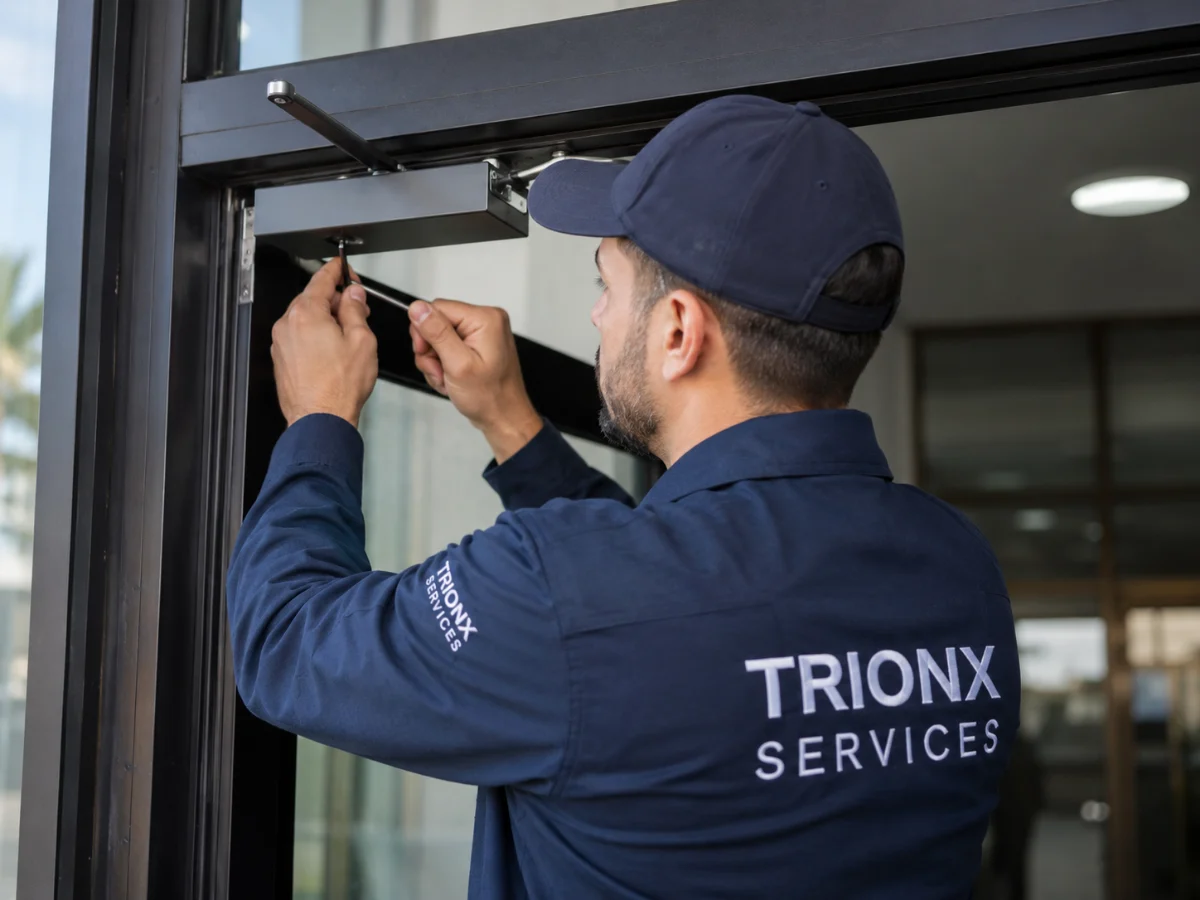
A gym running extended access needs a front door that latches with nobody on site, and it is the failure we get called to most in this sector.
Fitness space puts more cycles through its entrance than almost any property of the same size, and most operators now run extended or 24 hour access on fobs and codes. That turns the front door into a security system that has to work unattended at three in the morning.
Humidity does the rest. Locker rooms and studio spaces hold moisture that works into hardware, and doors in those areas need a shorter interval than the rest of the building.
What we get called for
Performed in-house
Performed by TrionX employees. No Florida contractor licence is required for this trade, and TrionX carries general liability and workers compensation covering the work.
Why TrionX
On extended access the entrance has to latch and lock reliably with nobody present. A closer that no longer pulls the door shut is an open building overnight, regardless of how good the access control is.
A closer specified for an office door will not survive a gym entrance. A continuous hinge and a correctly sized closer cost more once and remove a call that would otherwise return every few months.
Locker room and studio doors sit in moisture that corrodes hardware from inside. They need checking on a shorter cycle, and hardware chosen with the environment in mind.
Common questions
Treat it as urgent. A door resting against the latch without engaging is an unsecured building and it defeats the access control on the opening entirely. The usual causes are a weakened spring, a slow latch speed or building pressure, and most are fixed on the first visit.
Usually because it was specified for a lighter door than a gym entrance actually is. Cycle counts here are extreme. Fitting a closer and hinge sized for the traffic costs more once and stops the same call recurring every few months.
We fit, rehang and maintain reader and keypad hardware, strikes, door furniture and locks, and change codes and credentials. Wiring, power supplies and panel connections are licensed electrical work at any job size, so an electrician handles that part.
Yes, by taking individual openings out of use rather than the whole entrance, and planning anything disruptive for the quietest hours. On a 24 hour facility that means working around members rather than around a closure, and it goes into the scope.
Further reading
Written for the people who have to make the call. More in our insights, and the vocabulary in the glossary.
Closers and hinges sized for gym cycle counts, latching that works with nobody on site, and reader hardware maintained by our own employees. Wiring goes to a licensed electrician.