
Doors
What a failing door closer is telling you
Commercial entrance doors rarely fail all at once. The closer goes first, it goes slowly, and every stage of it looks like something a tenant can live with until the door stops latching.
A door closer is the most worked component on a commercial entrance. It operates every time somebody walks through, in Miami heat, with salt in the air on half the properties we cover. It is also the part most likely to be adjusted by whoever had a screwdriver, which is how a lot of them arrive at us.
How the thing works
Opening the door compresses a spring inside the closer body. The spring wants to shut the door again, and it would do it hard enough to break glass, so hydraulic fluid is metered through valves to control the speed. Those valves are the adjustments: a sweep valve for most of the arc, a latch valve for the last few inches, and on many units a backcheck valve that stops the door being flung into the wall.
Almost every symptom below is a spring problem, a fluid problem or a valve problem, and they need different answers.
The door slams
The sweep speed is set too fast, or the fluid has thinned in the heat, or the valve has been wound out by somebody trying to fix a door that was closing too slowly. Slamming is worth treating quickly. It loosens the frame, works the hinges, cracks glazing over time, and on a fire rated assembly it damages the components that are supposed to hold in a fire.
If the door slammed only after the weather turned, suspect fluid viscosity rather than the adjustment. Closers are temperature sensitive and a unit at the end of its life stops coping with the swing between an air conditioned lobby and a Miami afternoon.
The door will not latch
This is the symptom to act on. The door swings most of the way shut and stops short, or it touches the latch and rests there without engaging.
The causes divide roughly in three. The latch speed is set too slow and the door runs out of energy. The spring has weakened and no longer has the power to overcome the latch and the seals. Or the door is not the problem at all and the building is pulling against it, which happens where stack effect or an unbalanced HVAC system puts the lobby under pressure.
An unlatched door is an open door. It is a security exposure overnight, it defeats the access control on the opening, and on a fire door it is a life safety failure, because a door that is not latched does not hold. Inspectors check this, and they check it by walking up and letting the door go.
The door sticks open, or opens hard
Sticking open is usually a spring that has lost tension or a closer that has lost fluid. Opening hard is the opposite adjustment problem, and it matters more than it sounds: accessibility requirements set limits on how much force it should take to open a door on an accessible route, and a closer wound up to force a stubborn door shut is the usual reason a building fails that check.
Those two pull against each other, which is why closers get adjusted into a compromise that satisfies nobody. When a door needs high opening force to latch reliably, the fault is normally alignment, seals or building pressure rather than the closer, and adjusting the closer only moves the problem.
There is oil on the door or the frame
A closer that is leaking hydraulic fluid is finished. There is no seal kit worth fitting on a commercial unit, the fluid level determines the damping, and the behaviour gets worse and less predictable from the day it starts. Replace it. A leaking closer also drips onto the floor below, which is a slip exposure in an entrance.
Adjust or replace
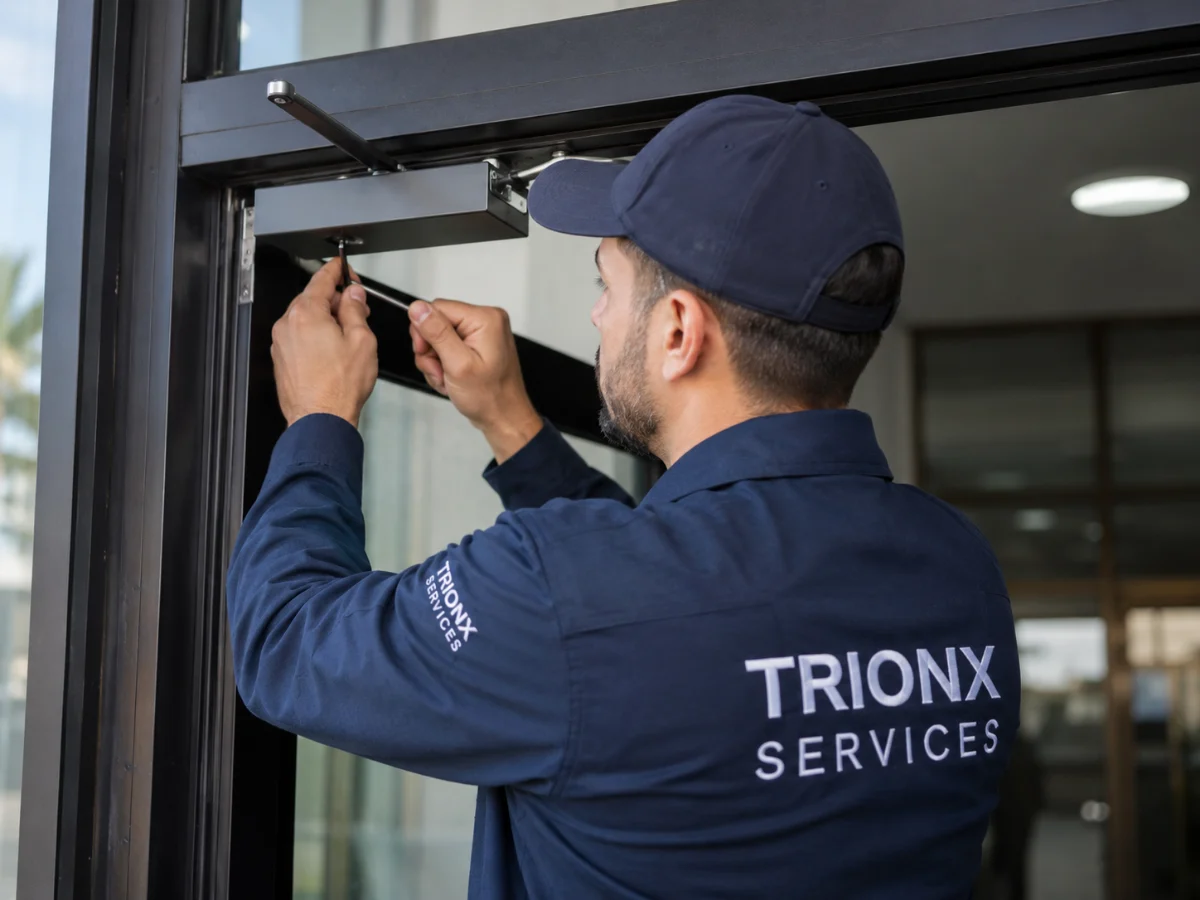
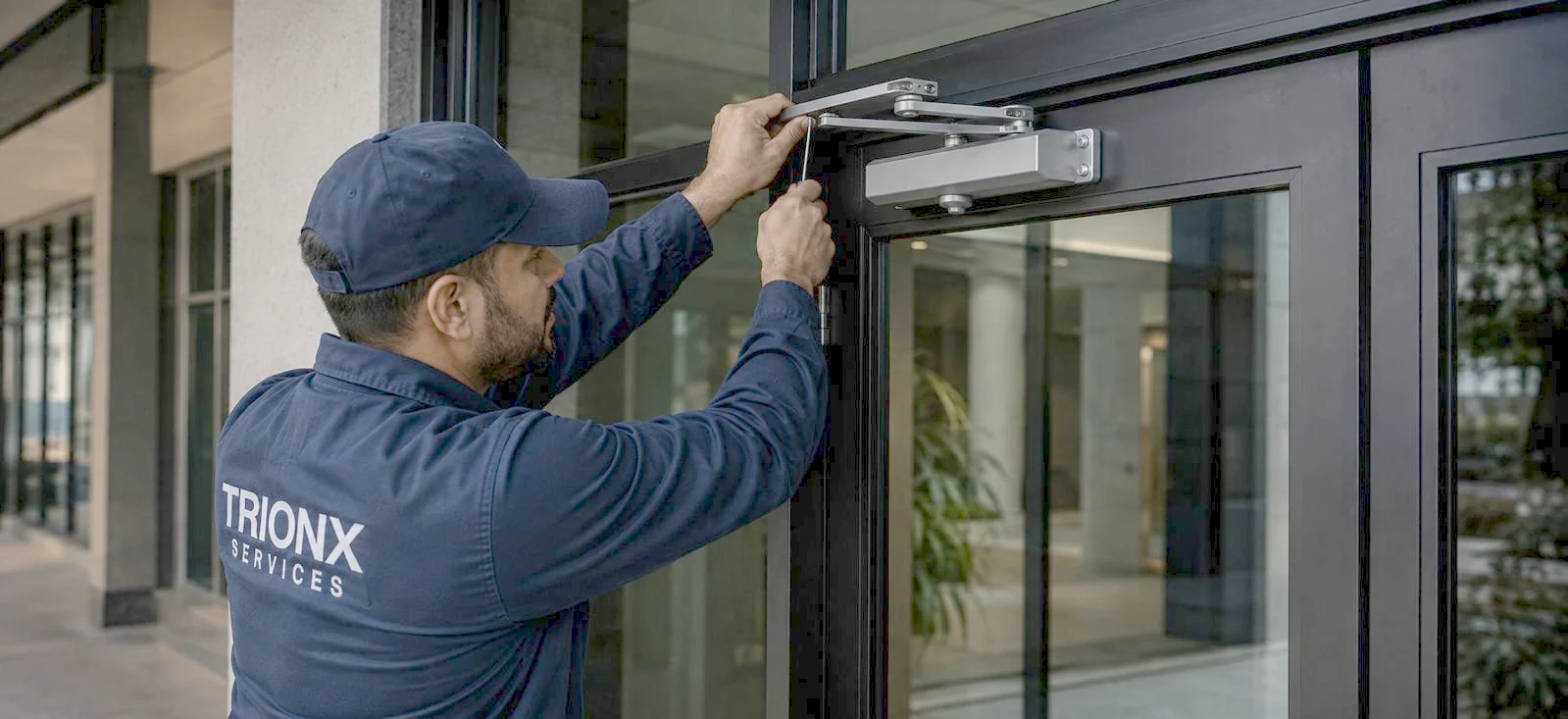
Adjustment is the answer when the body is sound and dry, the door is hung correctly, and the speeds are simply wrong. That is a short visit and it fixes a surprising number of complaints.
Replacement is the answer when the unit leaks, when the spring no longer latches the door at a sensible sweep speed, when the arm or bracket is bent, or when the closer fitted is too light for the door. That last one is common on properties where a previous repair used whatever was on the van. A closer is sized to the door width, weight and exposure, and an undersized unit on an exterior door in wind will never latch properly however it is adjusted.
Before either, check the door itself. Hinges with wear, a dropped frame, a threshold fouling the bottom rail or compressed weatherstripping will all defeat a healthy closer, and fitting a new one over an alignment problem wastes the part.
Fire doors are a separate matter
On a fire rated door assembly the closer is part of the rating. It has to be a listed unit for that assembly, it has to be fitted the way the listing requires, and the door has to close and latch from any angle it is opened to, under its own power, every time. Wedging one open, or leaving one that no longer latches, is the finding inspectors write up most often.
Hold open devices are permitted where they release on the fire alarm. A wooden wedge is not a hold open device.
What we do with them
Doors and hardware are performed by our own technicians, and no Florida contractor licence is required for the work. On a closer call we check the door before the closer, adjust where adjustment is genuinely the fix, and replace with a unit sized for the opening where it is not. Every visit leaves photographs, the model fitted, and the sweep and latch settings recorded, so the next person to touch that door knows where it was left.
Common questions
Questions we get asked about this
Why will my commercial door not latch?
Three causes account for most of it: the latch speed is set too slow so the door runs out of energy, the spring has weakened and can no longer overcome the latch and seals, or the building is under pressure and pushing against the door.
Is a door that will not latch a fire safety problem?
On a fire rated assembly, yes. The rating depends on the door closing and latching under its own power from any opening angle, so a door that rests against the latch without engaging does not hold. Inspectors test this by letting the door go.
Can a door closer be adjusted instead of replaced?
Adjustment works when the body is sound and dry, the door is hung correctly and the speeds are simply wrong. Replace it when it leaks hydraulic fluid, when the arm or bracket is bent, or when the unit is undersized for the opening.
Why does my door slam only in hot weather?
Hydraulic fluid thins as it warms, so a closer near the end of its life stops controlling the sweep on a hot afternoon while behaving on a cool morning. That temperature sensitivity points at the unit itself rather than at the adjustment.
What causes oil on a door frame?
A door closer leaking hydraulic fluid, which means the unit is finished. There is no seal kit worth fitting on a commercial closer, the fluid level sets the damping, and the behaviour gets less predictable from the day it starts leaking.
Keep reading
Related field notes

One company, whoever does the work
Our technicians handle the trades that need no state licence, and licensed contractors handle the ones that do. Either way we scope it, book the visit and file the record. Tell us the property and the problem and we will come back with a window.