
Doors
Warehouse dock doors, gate access and the loading yard
A distribution building fails at its openings. Everything else can wait a day. A dock that will not open cannot.

Industrial property concentrates its risk in a small number of places. The openings take enormous cycle counts and physical abuse, and a failure at any of them either stops the operation or leaves the yard open overnight.
Personnel doors take the worst of it
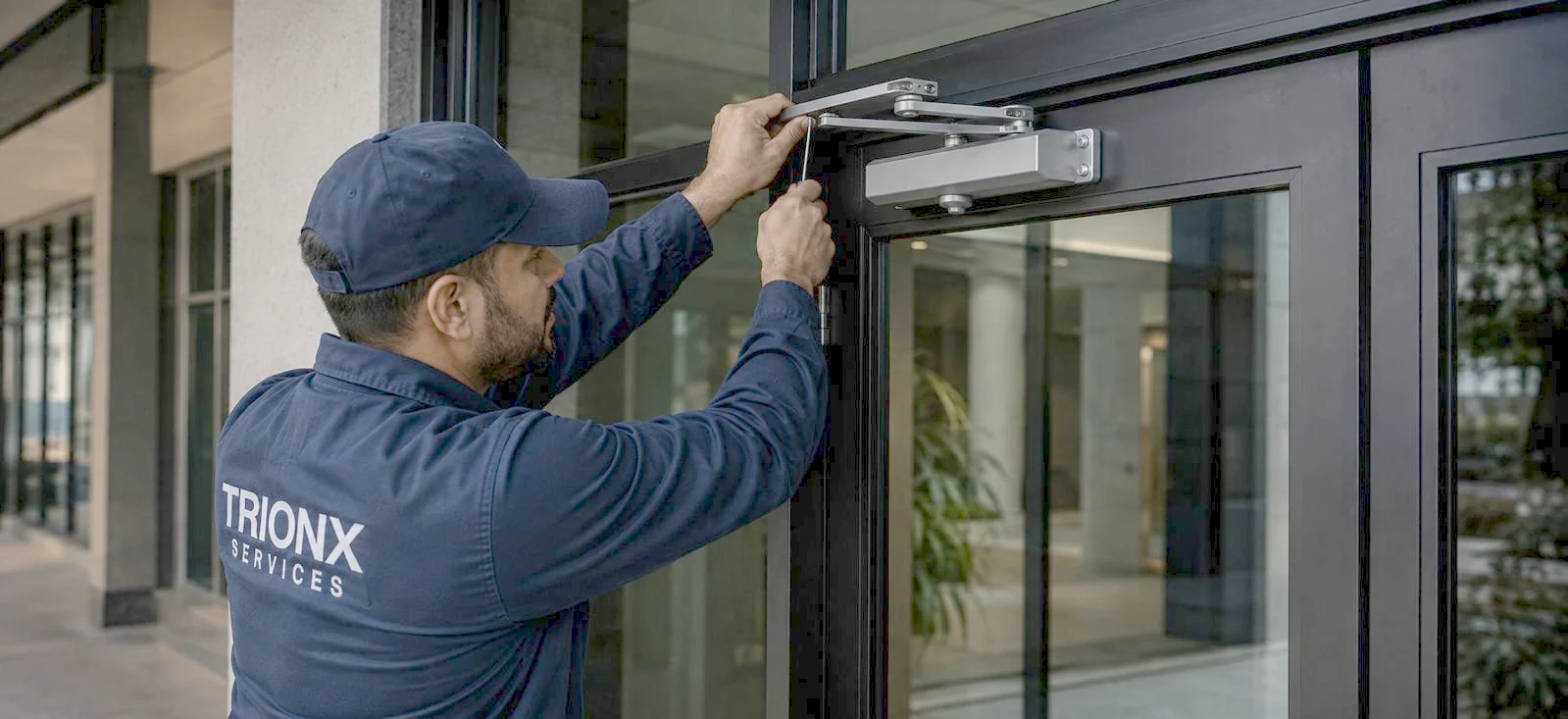
The dock-side personnel door is the most abused door on most sites. It is used constantly, propped regularly, and hit by equipment.
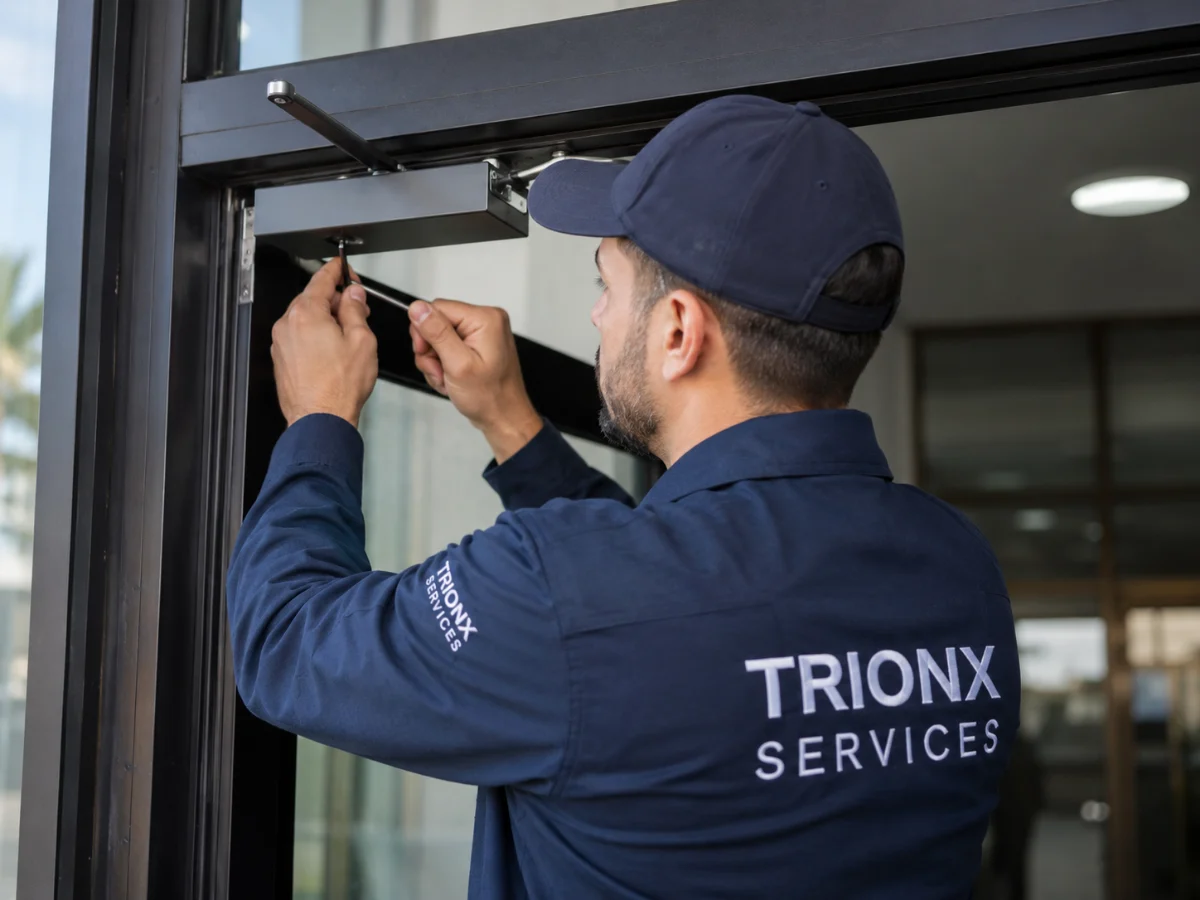
The recurring faults are predictable. Hinges wear and the door drops, so it stops latching. Closers get wound up to force the latch, so the door becomes heavy and the wear accelerates. The frame takes an impact and distorts. Weatherstripping is destroyed and never replaced, so dust and water come in.
Fitting hardware sized for the traffic is the fix that stops the cycle. A continuous hinge spreads the load along the full height instead of concentrating it at three points, and a correctly sized closer stops the door being fought with. Both cost a little more once and remove a recurring call.
Roll-up and sectional doors
The hardware side, meaning guides, latches, locks, alignment and manual operation, is straightforward maintenance. Doors that bind in the guides, drag at one side or will not latch are usually alignment or wear rather than a failed mechanism.
Powered operators are a different matter. Motors, controls, safety edges and photo eyes involve wiring and motorised equipment, which is licensed electrical work in Florida at any job size. That half gets coordinated through a licensed contractor, and it is worth scheduling with the hardware work rather than separately, because both usually need the same access and the same downtime window.
The safety devices deserve specific attention. A photo eye or safety edge that has been bypassed because it was nuisance-tripping is a serious exposure on a door that heavy, and it is a common find.
The gate is the security model
On most industrial sites the perimeter gate is the security. If it is open or its access control is not working, everything inside is available.
The parts that fail: keypads exposed to weather and salt, pedestrian gate hardware and locks, hinges and latches on manual gates, and the operator on powered ones. Keypads and hardware are in-house work for us. The operator and its power supply are electrical.
Codes are the other half of it. A gate code that has not changed in two years has been shared with every driver, contractor and former employee who ever needed it, and changing it is a two-minute job that almost nobody schedules.
Yard and perimeter
- Fencing condition and any point where it can be climbed or lifted
- Padlocks and hasps on compounds, cages and external stores, which are rarely on any register
- Yard lighting, which is both a security and a safety item once vehicles are moving in the dark
- Line marking and pedestrian routes through the yard, which is the highest-risk area on the site
- Bollards and guards protecting doors and columns from vehicle strikes
The bollard point is worth dwelling on. A bollard is far cheaper than the door frame or column it protects, and on a site with repeated impact damage the honest recommendation is usually protection rather than another repair.
Key control across many holders
Industrial sites issue access to more people than anyone tracks: shift staff, drivers, contractors, cleaners, security. Without a register, every departure is either an unknown or a site-wide rekey, and both are expensive in different ways.
A written register plus a restricted keyway is what makes a departure manageable, because a returned key genuinely means something when copies cannot be cut freely.
Why a scheduled pass beats reactive work here
Access equipment is most of the cost on an industrial building. Getting to a high bay fixture or working at a dock in a live yard needs planning, equipment and often a pause in operations, and paying for that per fault is the expensive way to run a site.
A recurring pass across personnel doors, roll-up door hardware, gate hardware, locks, high bay and yard lighting, and exit lighting catches the failures before they stop anything, and it pays for the access once.
The split on an industrial site
Performed by our own W-2 employees, with no Florida contractor licence required: personnel door hardware, closers, thresholds and panic devices; roll-up door hardware, guides and alignment; locks, gate keypads, padlocks, cages and key registers; relamping high bay, yard and exterior fixtures; exit and emergency light testing; drywall, carpentry and finishes in office areas; painting, pressure washing and sealing.
Coordinated through licensed contractors: all electrical work including three-phase, dock equipment power, lighting circuits and anything touching wiring, ballasts or drivers; powered gate and roller shutter operators; HVAC; plumbing; and anything requiring a permit in any trade.
Common questions
Questions we get asked about this
Why does our dock personnel door keep failing to latch?
Almost always because it has dropped. The door is used constantly and hit by equipment, hinges wear, and the latch stops meeting the strike squarely. Winding the closer up to force it shut accelerates the wear, so the fix is the hinges and alignment rather than the closer.
Do you service powered roller shutter and gate operators?
The hardware side is ours: guides, latches, locks, alignment and manual operation. Motors, controls, safety edges and photo eyes involve wiring and motorised equipment, which is licensed electrical work in Florida at any job size, so a licensed electrician handles that and we coordinate it.
How often should gate access codes be changed?
Far more often than they are. A code unchanged for two years has been shared with every driver, contractor and former employee who ever needed it. Changing it takes two minutes and costs nothing, and it should happen on a schedule and after any significant departure.
Is a scheduled maintenance pass worth it on a warehouse?
Usually yes, because access equipment is most of the cost. A recurring pass across personnel doors, roll-up hardware, gate hardware, locks and high bay lighting catches failures before they stop the operation and pays for the access once instead of on every separate call-out.
Keep reading
Related field notes

One company, whoever does the work
Our technicians handle the trades that need no state licence, and licensed contractors handle the ones that do. Either way we scope it, book the visit and file the record. Tell us the property and the problem and we will come back with a window.