
Doors
ADA opening force: the limit, and how doors fail it
A door that takes real effort to open is an accessibility problem before it is a maintenance one, and the usual cause is somebody trying to fix a different fault.
Accessibility requirements limit how much force it may take to open a door on an accessible route. The figure most often cited for interior hinged doors is five pounds of force, and the important part is that this applies to the door in service, not to the door on the day it was installed.
Doors drift past it. They drift past it slowly, nobody notices, and then a survey or a complaint puts it on a list.
What the limit covers, and what it does not
The force limit applies to pushing or pulling the door open. It does not apply to the initial effort of releasing a latch or an exit device, and fire rated doors are treated differently because the closer has to be strong enough to close and latch the door reliably.
That exemption is narrower than people assume, and treating every door with a closer as exempt is the mistake we see most often. Verify what applies to the specific opening rather than assuming, and where the requirement is genuinely in tension with fire door performance, that is a design question for whoever specified the assembly.
Why doors get heavier
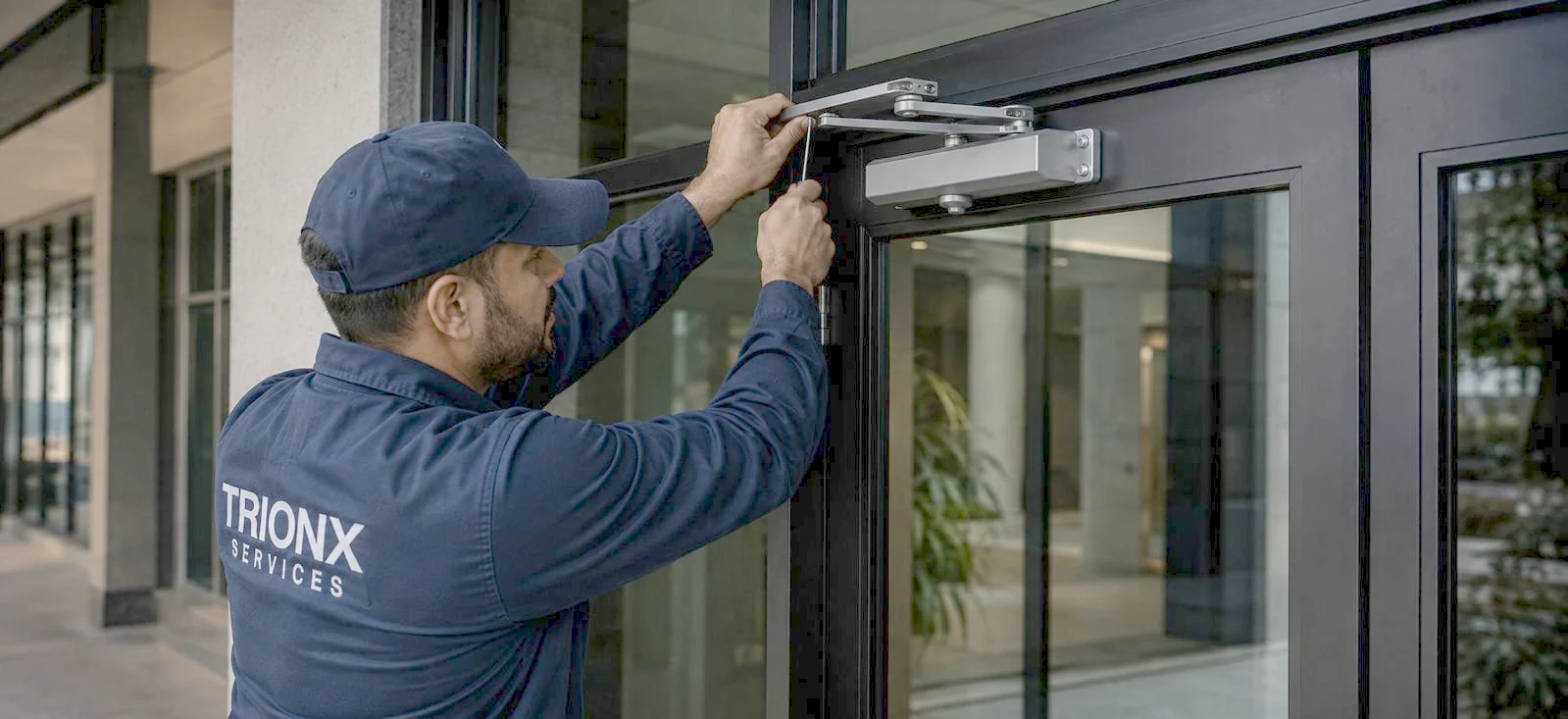
Somebody wound the closer up. Far and away the most common reason. A door was not latching, so the spring tension was increased until it did. The door now latches and takes a shove to open. The original fault, which was usually alignment or a worn spring, is still there.
The door is binding. A dropped door rubbing the frame or the threshold adds friction the whole way through the swing. This one is worth checking first because fixing it lowers the force without touching the closer at all.
Weatherstripping compressed or over-specified. Seals that are too thick, or that have hardened and no longer compress, add measurable resistance. On an exterior door with a full perimeter seal and a drop seal at the threshold this adds up.
Building pressure. An unbalanced HVAC system or stack effect in a tall building puts the space under pressure and the door has to be pushed against it. On a lobby door in a Miami tower this can be the dominant factor, and no amount of closer adjustment fixes it.
The wrong closer for the door. An oversized unit fitted because it was what was on the van. It closes the door emphatically and opens like a vault.
How it gets measured
With a door pressure gauge, applied at the handle or the leading edge, pulling steadily rather than jerking. Take the reading through the main part of the swing rather than at the very start, and take it more than once, because a single reading on a door that binds intermittently is not representative.
Test in the condition the building normally runs in. A lobby door measured with the air handling off and every other door propped will read very differently from the same door at nine in the morning.
What can be adjusted, in order
- Fix the alignment. Free the door in its frame first. Friction removed here is force removed everywhere.
- Check and replace the seals. Correctly specified weatherstripping in good condition, rather than the thickest available.
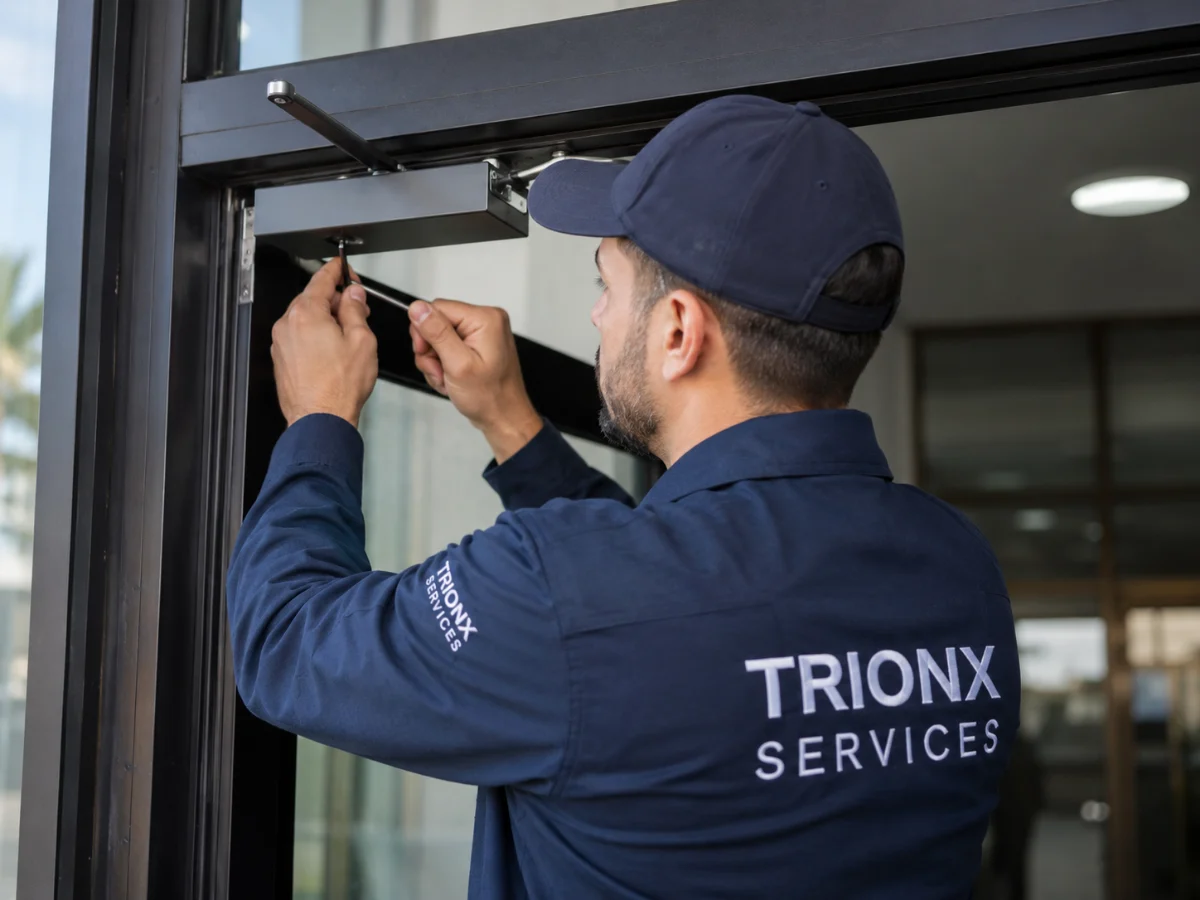
- Set the closer spring correctly. Most commercial closers have adjustable spring power. It gets set to the lowest value that still closes and latches the door reliably, not to the value that makes latching easy.
- Tune the sweep and latch valves. The latch speed matters here: a door with adequate latch speed will engage without needing extra spring power.
- Look at the building. If the door still reads high with everything mechanical correct, the pressure differential is the cause and it is an HVAC question.
Where adjustment runs out
If a door cannot be brought within the limit while still latching reliably, the honest answer is that the opening needs something changed rather than adjusted. That might be a correctly sized closer, a different seal specification, addressing the pressure, or on a genuinely difficult opening a power operator.
A power operator is an electrical installation, so Florida requires a licensed contractor for it. We scope it, coordinate the contractor, and handle the hardware and the record around it.
Why this is worth being ahead of
Opening force is one of the few accessibility items that is trivially easy to test, which makes it one of the first things checked. A gauge takes seconds and needs no drawings. It also tends to correlate with other problems: a door wound up hard to force a latch is telling you the alignment was never fixed.
Doors and hardware are performed by our own technicians, and no Florida contractor licence is required for this work. We measure, adjust in the order above, record the reading before and after, and say plainly when an opening cannot be brought into line by adjustment alone.
Common questions
Questions we get asked about this
What is the maximum opening force for a commercial door?
The figure most often cited for interior hinged doors on an accessible route is five pounds of force. Fire rated doors are treated differently, since the closer has to reliably close and latch them, but that exemption is narrower than most people assume.
Why has our entrance door become hard to open?
Usually because somebody increased the closer spring tension to make a door latch that was not latching. The door now opens hard and the original fault, normally alignment or a worn spring, is still there. Binding on the frame or threshold is the other common cause.
How is door opening force measured?
With a door pressure gauge at the handle or leading edge, pulled steadily through the main part of the swing rather than jerked at the start. Measure in the condition the building normally runs in, since air handling and stack effect change the reading significantly.
Can opening force be reduced without stopping the door latching?
Usually yes, by fixing alignment first, then the seals, then setting the spring to the lowest value that still latches reliably, then tuning the latch speed. Where it cannot, the opening needs a change rather than an adjustment, and we say so rather than compromising the latch.
Keep reading
Related field notes

One company, whoever does the work
Our technicians handle the trades that need no state licence, and licensed contractors handle the ones that do. Either way we scope it, book the visit and file the record. Tell us the property and the problem and we will come back with a window.