
Doors
Fire door inspection: the annual requirement and the paperwork
A fire door only works if it closes and latches by itself, every time. Almost everything that gets written up is a door that no longer does.
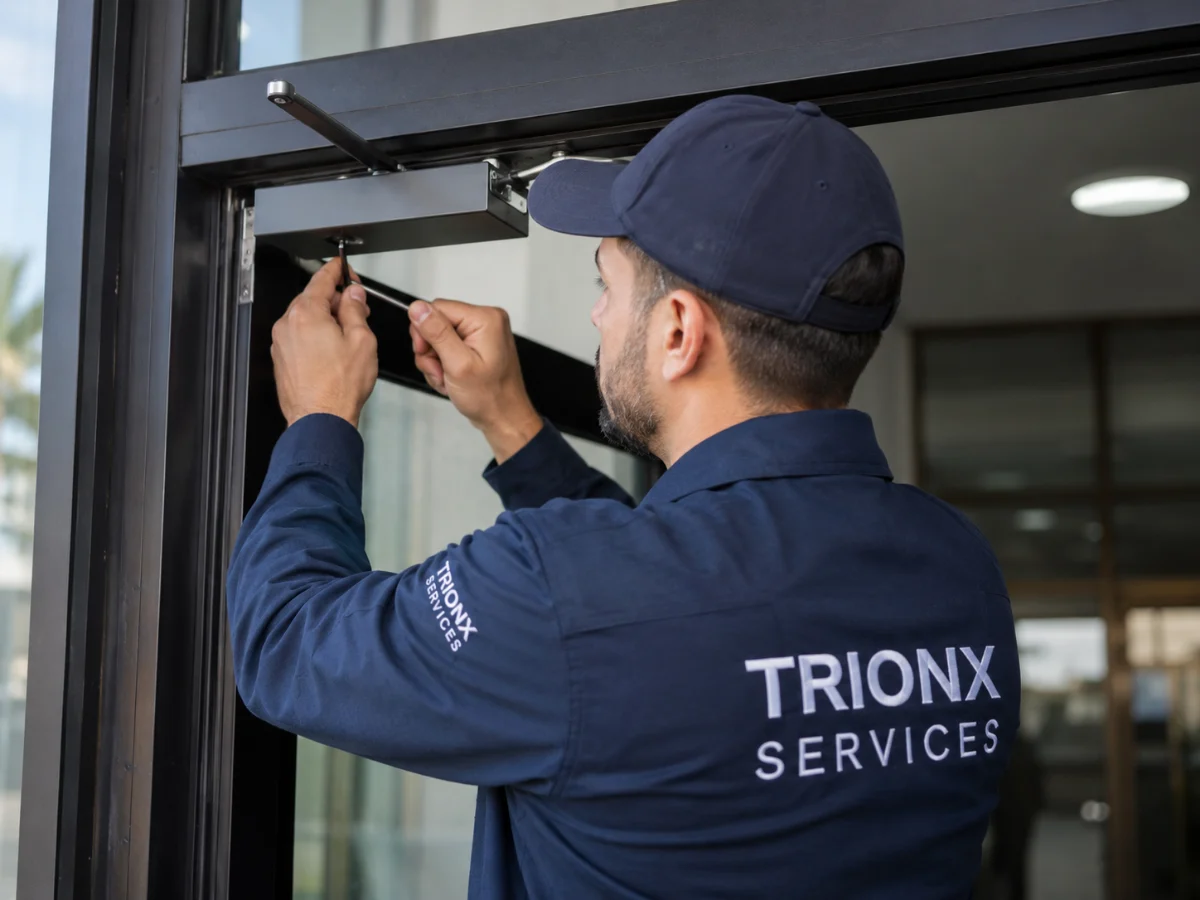
Fire rated doors are the part of a building's passive fire protection that people interact with hundreds of times a day, which is why they degrade faster than anything else in the system and why they are inspected annually.
The assembly, not the door
The rating belongs to the whole assembly rather than to the leaf. Door, frame, hinges, closer, latch, seals, glazing and any hardware all form part of it, and each component has to be correct for that rating and installed the way the listing requires.
This is why apparently small changes matter. Fitting a non-rated closer, drilling the leaf for a viewer, adding a kick plate above the permitted size, or replacing a latch with something that looks similar can each take the assembly out of compliance even though the door still looks and feels fine.
The core test
Everything comes back to one behaviour: the door has to close from any angle it is opened to, under its own power, and latch, without assistance.
Open it fully, let go, and watch. If it stops short, rests against the strike, needs a push, or closes but does not latch, the assembly has failed regardless of how good the rest of it looks. An inspector will do exactly that, and so can you.
What an annual inspection covers
Typically all of the following:
- No holes, breaks or missing parts in the door or frame
- Glazing, vision panels and beads intact and correctly secured
- Door, frame and hardware alignment, and clearances within tolerance
- No missing or broken fasteners anywhere in the assembly
- Seals and edge protection present and undamaged
- The door closes fully from the fully open position and latches under its own power
- Coordinators on door pairs operating so both leaves close in the right order
- Nothing installed that would obstruct closing or latching
- The label present and legible, since removing or painting it destroys the evidence of the rating
- Hold-open devices, where fitted, releasing on alarm
The findings that recur
The door is wedged or propped. The most common finding by a wide margin, and always for a practical reason: airflow, deliveries, a corridor that feels closed in. A wedge is not a hold-open device. Where a door genuinely needs to stand open, the answer is a device that releases on the fire alarm.
It closes but does not latch. Usually alignment or a weakened closer spring. The door looks shut and is not held, which is the failure that matters most and the one nobody notices.
A painted or missing label. Decorating contractors paint labels routinely. Without a legible label the rating cannot be verified and the assembly may have to be treated as unrated.
Unauthorised modification. Holes drilled for cables, a viewer added, an oversized kick plate, a lock changed for a non-rated one. Each is small and each is a finding.
Gaps out of tolerance. Clearances around the leaf and at the threshold matter, and a door that has dropped fails on this as well as on latching.
Dogged exit devices. Dogging holds the latch retracted, which is not permitted on a rated door because the latch has to engage every time.
The paperwork
The record needs to show, per door: a unique identifier, its location, the date inspected, who inspected it, what was checked, what failed, what was done and when, and a re-check where a failure was corrected.
Numbering the doors physically is worth doing once. An inspection record referring to "corridor door, second floor" on a building with six of them is nearly useless a year later, and a small permanent label removes the ambiguity permanently.
Keep the record for at least the period your authority or insurer expects, and keep it somewhere that is not only on a machine in the building.
Between inspections
The annual inspection is a snapshot. Doors fail in between, and the walk that catches it takes minutes.
Monthly, on each rated door: open fully, release, watch it close and latch. Check nothing is wedging it, nothing is stacked against it, and the label is still visible. Write down the date and what you found.
That habit catches the propped door and the failed latch, which between them account for most of what gets written up.
What we do, and what we do not
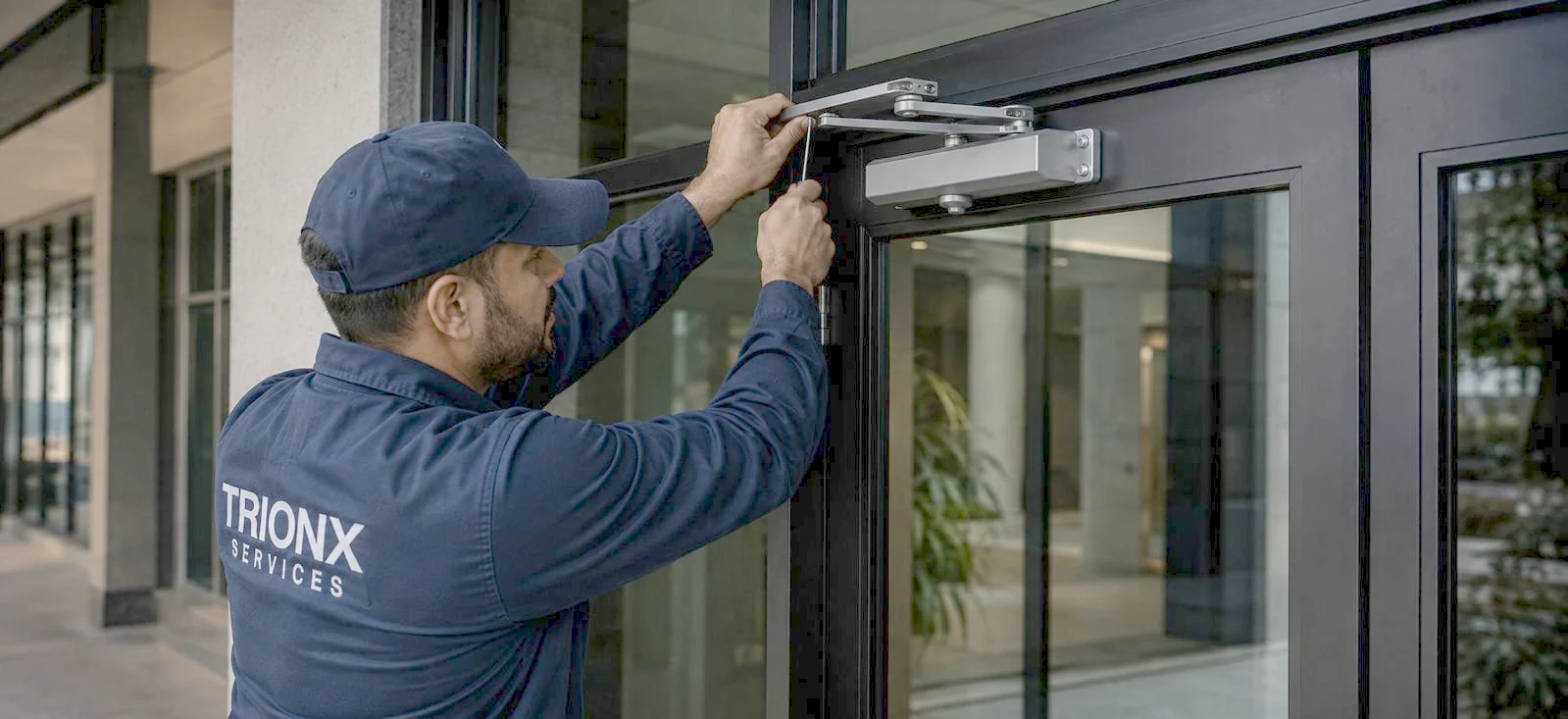
We repair and maintain the hardware: closers, hinges, latches, alignment, seals, coordinators, exit devices and locks, and we remove the secondary fixings that were added because something else was broken. That work is performed by our own W-2 employees and requires no Florida contractor licence.
We do not issue certification or compliance sign-off, and our maintenance record does not replace a formal inspection where one is required. Where a hold-open device is tied into the fire alarm, the alarm interface and its wiring are licensed electrical work and are coordinated. Where an assembly is beyond repair and needs replacing as a rated unit, we say so rather than continuing to adjust it.
Common questions
Questions we get asked about this
What is the main thing a fire door inspection checks?
That the door closes from any angle it is opened to, under its own power, and latches without assistance. Open it fully, let go and watch. If it stops short, rests against the strike or needs a push, the assembly has failed regardless of how good everything else looks.
Can a fire door be propped open?
Not with a wedge, which is the most common finding of all. Where a door genuinely needs to stand open, the answer is a hold-open device that releases automatically on fire alarm activation, so the door closes and latches when it matters.
Why does a painted-over fire door label matter?
The label is the evidence of the rating. Without a legible one the rating cannot be verified and the assembly may have to be treated as unrated. Decorating contractors paint them routinely, which is why it is worth flagging before any painting work starts.
Do you certify fire doors?
No. We repair and maintain the hardware, meaning closers, hinges, latches, alignment, seals, coordinators and exit devices, which needs no Florida contractor licence. We do not issue certification, and our maintenance record does not replace a formal inspection where one is required.
Keep reading
Related field notes

One company, whoever does the work
Our technicians handle the trades that need no state licence, and licensed contractors handle the ones that do. Either way we scope it, book the visit and file the record. Tell us the property and the problem and we will come back with a window.