
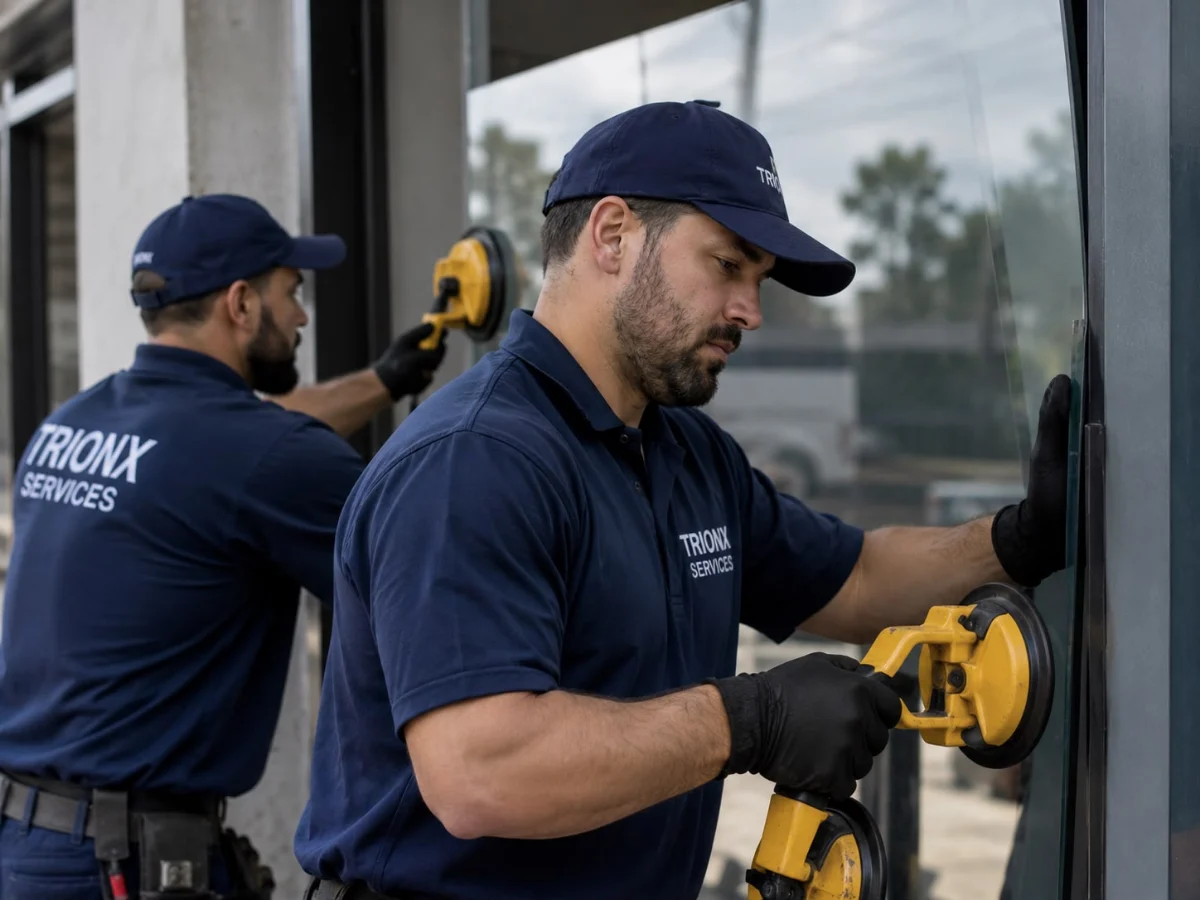
Glass
Impact-rated glazing and the NOA: what needs a permit
Repairing an existing opening and replacing a storefront look similar from the pavement. One is maintenance and the other is permitted construction, and the boundary matters.
Miami-Dade has the strictest windborne debris requirements in the country, and its product approval system is its own. Anyone maintaining commercial property here runs into it eventually, usually at the moment a piece of glass needs replacing and the answer turns out to be complicated.
What a Notice of Acceptance is
A Notice of Acceptance, universally shortened to NOA, is Miami-Dade County product approval. It confirms that a specific product, made by a specific manufacturer, in a specific configuration, has been tested and accepted for use here.
The important word is specific. An NOA covers a system rather than a material: the glass, the frame, the anchors, the sizes and the installation details, all together. A glass unit that performs perfectly in one frame has no standing in a different one, because the approval was for the assembly.
Florida also operates a statewide product approval system, and Miami-Dade NOAs are recognised more widely than the county. For work inside the county, the NOA is what you will be asked for.
Where impact rating is required
Miami-Dade sits in a High Velocity Hurricane Zone, and openings in a building envelope generally have to be protected against windborne debris. That is satisfied either by impact-rated glazing or by a tested shutter system over ordinary glazing.
Impact-rated glazing is laminated, because the requirement is that the opening stays closed after impact. A tempered pane fails the test by design: it fragments and clears the opening, which is the outcome the requirement exists to prevent.
In practice the exterior envelope of a commercial building is a regulated system and the interior partitions are not, which is the distinction that decides whether a job needs a submittal.
The line between repair and permitted work
This is the part worth being clear about, because it decides who does the job.
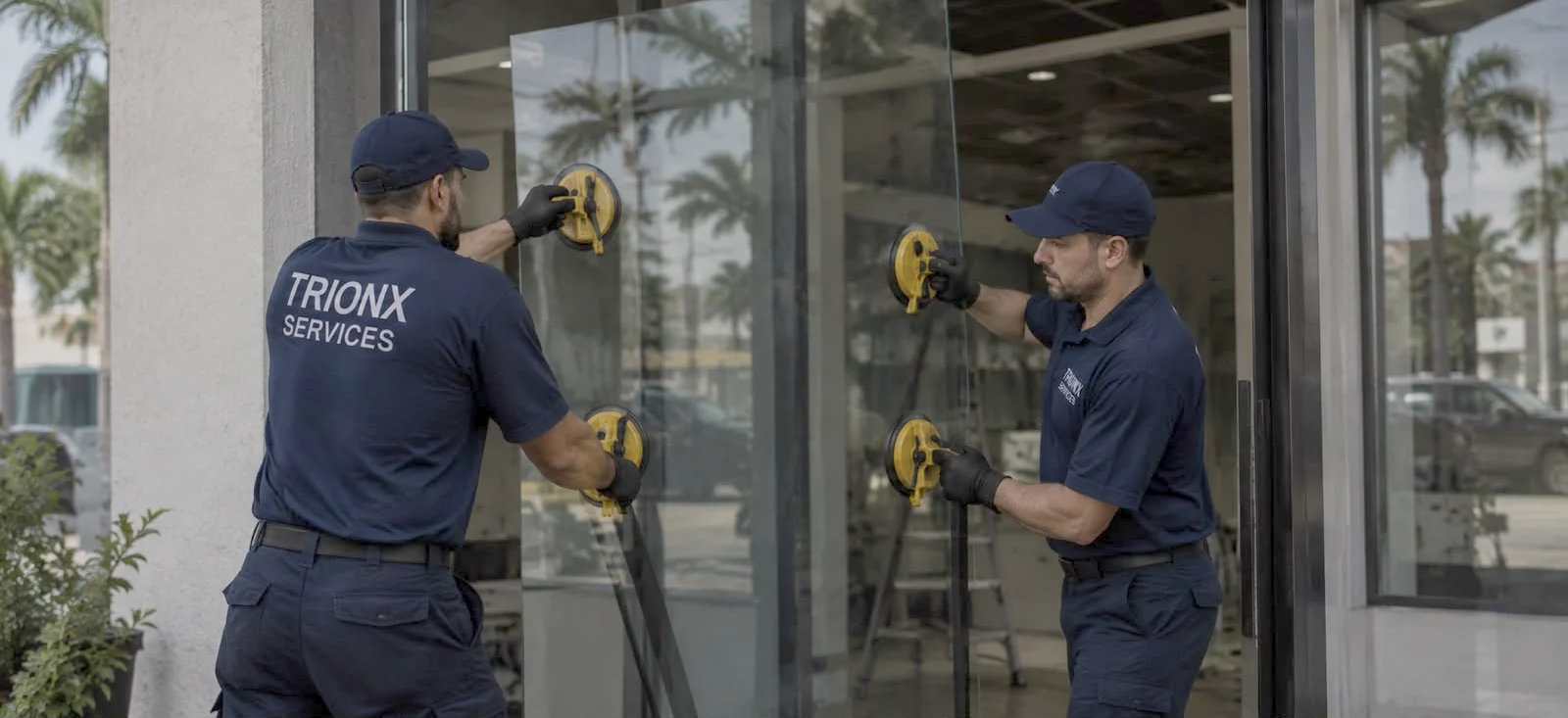
Repair and re-glazing of an existing opening is maintenance. A broken pane replaced like for like in a frame that stays where it is, in the size it already was, is performed by our own technicians and needs no contractor licence.
Replacing the system is construction. New frames, changed opening sizes, new anchors into the structure, or a full storefront replacement all require a permit and, in the envelope, a product approval submittal. That is licensed contractor work, coordinated by us rather than performed by us.
The grey area sits between them, and the honest test is whether the frame and the anchors are being touched. If the answer is yes, assume it is permitted work until confirmed otherwise.
What gets submitted, and why it takes time
A permitted glazing job needs the NOA for the system being installed, drawings showing the openings and how the product is anchored, and a design pressure calculation demonstrating the product is rated for the wind loads at that location on that building. Corners and upper floors carry higher pressures than the middle of a low elevation, and a product adequate in one position may not be in another.
None of that is quick. Building a realistic programme around the submittal and review period, rather than around the glass lead time alone, is the difference between a project that lands and one that sits boarded for a month longer than anyone told the tenant.
What to keep on file
For any impact-rated installation on a property you manage, keep the NOA number and the approval document, the design pressure calculation, the permit and its final inspection sign-off, and photographs of the anchors before they were covered.
That package answers three separate future questions: an insurer asking what protection the building has, a buyer or their surveyor during diligence, and an adjuster after a storm asking whether the installation was compliant. Assembling it retrospectively is far harder than filing it at the time.
Shutters as the alternative
Where replacing glazing is impractical, a tested shutter or panel system over the existing glass can satisfy the requirement instead. It carries its own approval, its own anchoring requirements and its own permit position, and it introduces an operational question that impact glass does not: somebody has to deploy it, and that takes time and staff before a storm.
For a property with a small number of openings and a reliable procedure, shutters can be the cheaper answer. For a large frontage or a building with no staff on site out of hours, impact glazing usually wins on total cost once the deployment problem is priced honestly.
How we handle it
We repair and re-glaze existing openings directly, and we board up around the clock when an opening is broken, because an open frontage overnight is a security and insurance exposure rather than a repair backlog item.
Where a job crosses into permitted work, we say so at survey, scope it, and bring in a licensed contractor who carries their own insurance, staying responsible for the scheduling, the access and the record. We would rather tell you at the survey that a job needs a permit than discover it after the frame is out.
Common questions
Questions we get asked about this
What is an NOA in Miami-Dade?
A Notice of Acceptance, which is Miami-Dade County product approval. It confirms a specific product from a specific manufacturer, in a specific configuration, has been tested and accepted for use here. It covers the whole assembly including glass, frame and anchors, not the glass alone.
Does replacing a broken pane need a permit?
Replacing a broken pane like for like in an existing frame is maintenance and needs no permit or contractor licence. Replacing the system, meaning new frames, changed opening sizes or new anchors into the structure, is permitted construction and is coordinated through a licensed contractor.
Can tempered glass be used as impact-rated glazing?
No. Impact-rated glazing has to keep the opening closed after impact, and tempered glass fragments and clears the opening by design, which is the outcome the requirement exists to prevent. Impact-rated products are laminated.
What documents should we keep for impact glazing?
The NOA number and approval document, the design pressure calculation for that position on the building, the permit and its final inspection sign-off, and photographs of the anchors before they were covered. That package answers an insurer, a buyer and a post-storm adjuster.

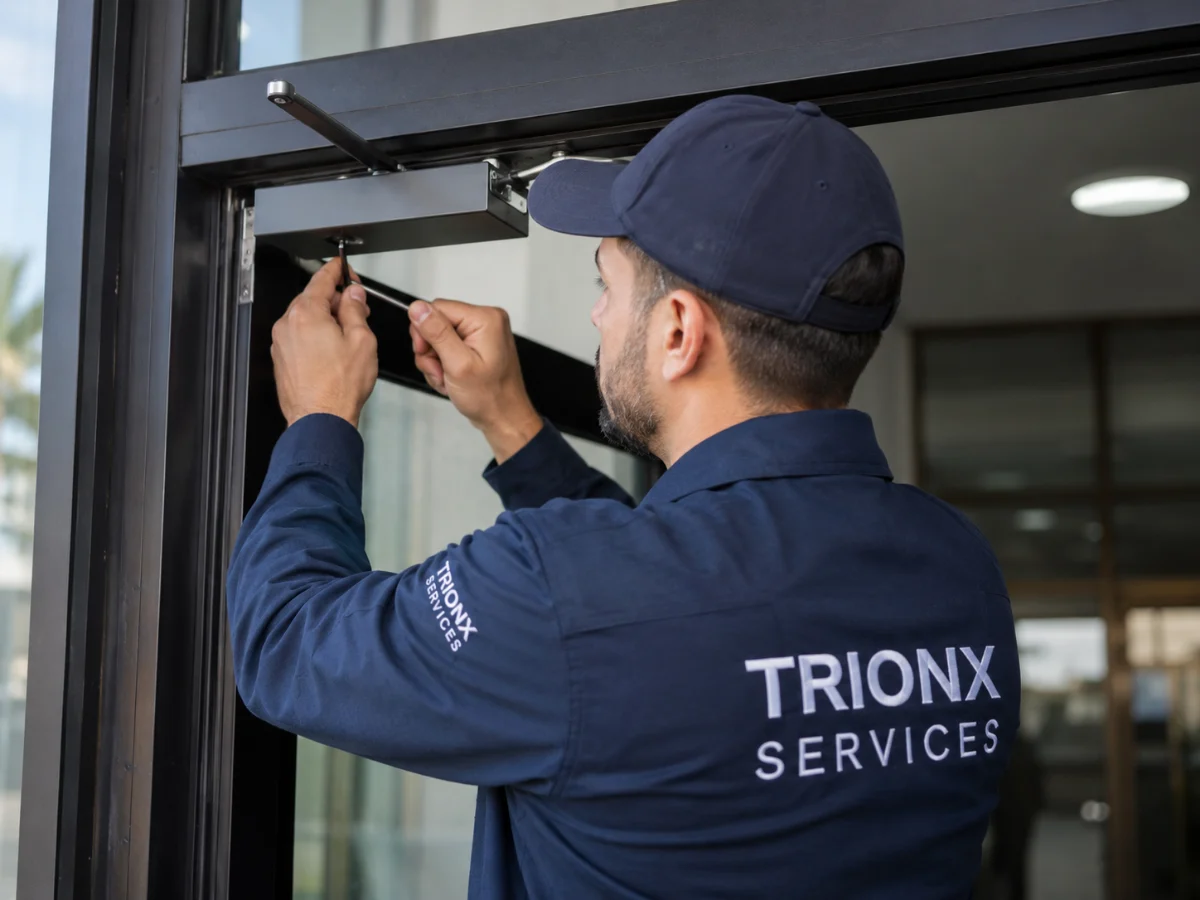
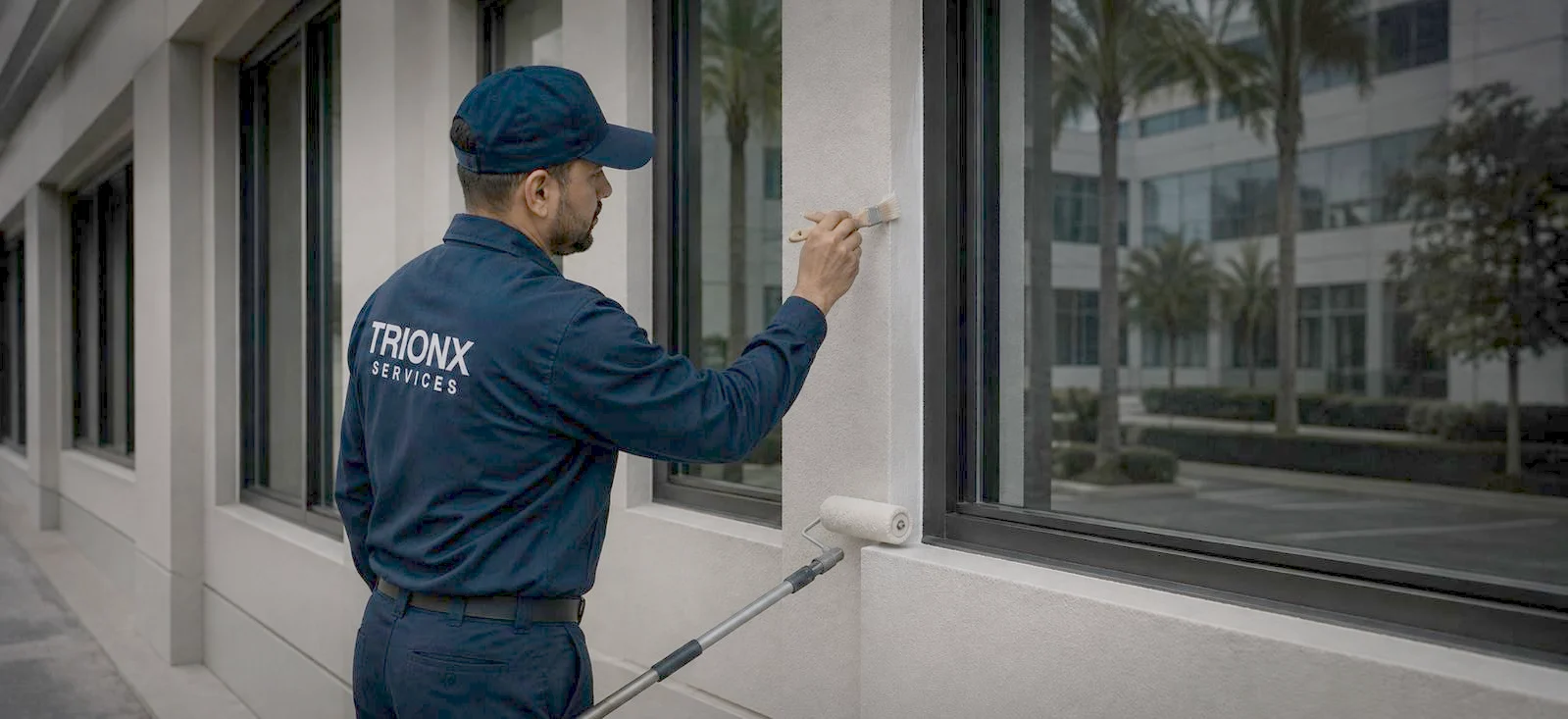


One company, whoever does the work
Our technicians handle the trades that need no state licence, and licensed contractors handle the ones that do. Either way we scope it, book the visit and file the record. Tell us the property and the problem and we will come back with a window.