

HVAC
Getting commercial HVAC through a Miami hurricane season
Storm damage to rooftop HVAC is rarely dramatic. It is water where water should not be, debris in a condenser, and a unit that runs for three more weeks before it stops.
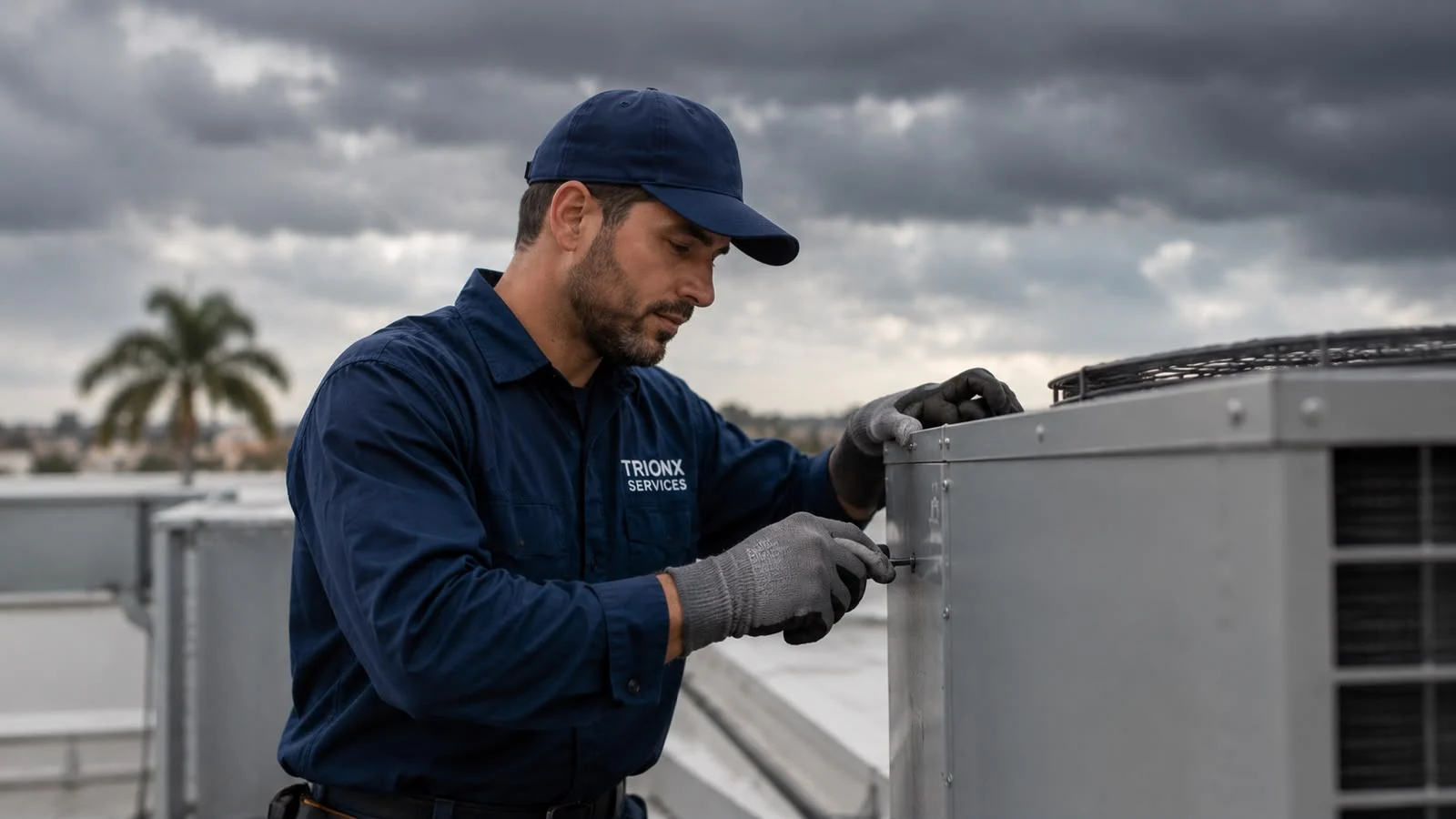
Hurricane season runs from 1 June to 30 November, and for commercial property in Miami-Dade the HVAC consequences are almost never the ones people plan for. Property managers picture a rooftop unit torn loose. What actually happens, in the overwhelming majority of cases, is subtler and more expensive: water driven into places it was never meant to reach, debris packed into a condenser coil, and a unit that keeps running just long enough for the connection to the storm to be forgotten.
By the time it fails in September, it looks like a random equipment failure. It usually is not.
Before the season: the inspection that actually matters
Pre-season inspection is worth doing in May, and it is worth doing properly. The items below are the ones that determine whether a storm causes damage or merely causes noise.
Curb and flashing seals. The rooftop unit sits on a curb, and the seal between them is what keeps water out. Sealant degrades under Miami sun far faster than it does further north, and a seal that is merely tired in May will fail under wind-driven rain in August. This is a cheap thing to renew and an expensive thing to ignore, because the water does not stop at the unit. It goes into the building.
Fastenings and tie-downs. Check that the unit is actually fixed to the curb the way the installation intended, and that fasteners have not corroded. Coastal properties should expect corroded fixings; that is not a defect, it is the environment.
Condensate drainage. A blocked condensate line in normal weather causes a nuisance overflow. During a storm, when the system is running hard against high humidity, it causes water damage. Clear the lines and check the pans and traps.
Electrical terminations and disconnects. Corroded or loose terminations are the single most common cause of post-storm failure, because they combine with moisture ingress to produce faults that show up days later. Weatherproof covers should actually be weatherproof.
Coil condition. A coil that is already fouled has no margin. When debris arrives on top of existing fouling, head pressure climbs and the compressor takes the strain. Clean coils are the cheapest insurance in the whole list.
The 48 hours before landfall
When a storm is genuinely inbound, the useful actions are short and mostly not technical.
- Photograph everything. Walk the roof and photograph each unit, the curb seals, and the surrounding roof surface. If you later need to establish that damage was storm-related rather than pre-existing deferred maintenance, this is the evidence that does it, and it takes fifteen minutes.
- Clear the roof of loose material. Anything not fixed down becomes a projectile, and the thing it most often hits is a condenser coil. Loose flashing, old filters, offcuts, unsecured tools.
- Record model and serial numbers if they are not already in your file. Post-storm, when everyone is trying to source the same parts, having the details to hand moves you up the queue meaningfully.
- Decide your shutdown position. Know in advance whether you will shut units down and isolate them at the disconnect, and who is responsible for doing it. Making this decision at 6am with the storm eight hours out produces poor decisions.
Shutting down and isolating protects equipment from the electrical side of a storm, meaning the surges and dirty power that arrive with grid disruption. The trade-off is that a building without cooling in Miami takes on humidity fast, and that brings its own problems for interiors and stock. There is no universal right answer here, only a right answer for your property, and May is a better time to work it out than August.
After the storm: what fails, and when
Post-storm failures arrive in three distinct waves, and knowing the pattern helps you sequence the response.
Immediately. Units that will not start at all. The cause is usually electrical: tripped protection, a failed contactor, water in a disconnect, or surge damage from the moment grid power came back. Often a straightforward repair, assuming parts are available.
Within one to two weeks. Capacity problems. A unit runs, cools inadequately, and draws more current than it should. This is typically debris in the condenser coil or a refrigerant leak from a physical impact. Left alone, it becomes the third wave.
Three to eight weeks later. Compressor failure. The compressor has been running against high head pressure since the storm because nobody cleaned the coil, and eventually it fails. This is the expensive one, and it is usually preventable. It follows directly from ignoring the second wave.
The practical implication: a post-storm inspection is worth far more than a post-storm repair. A coil cleaned in week two prevents a compressor replaced in week six.
Documentation and the insurance conversation
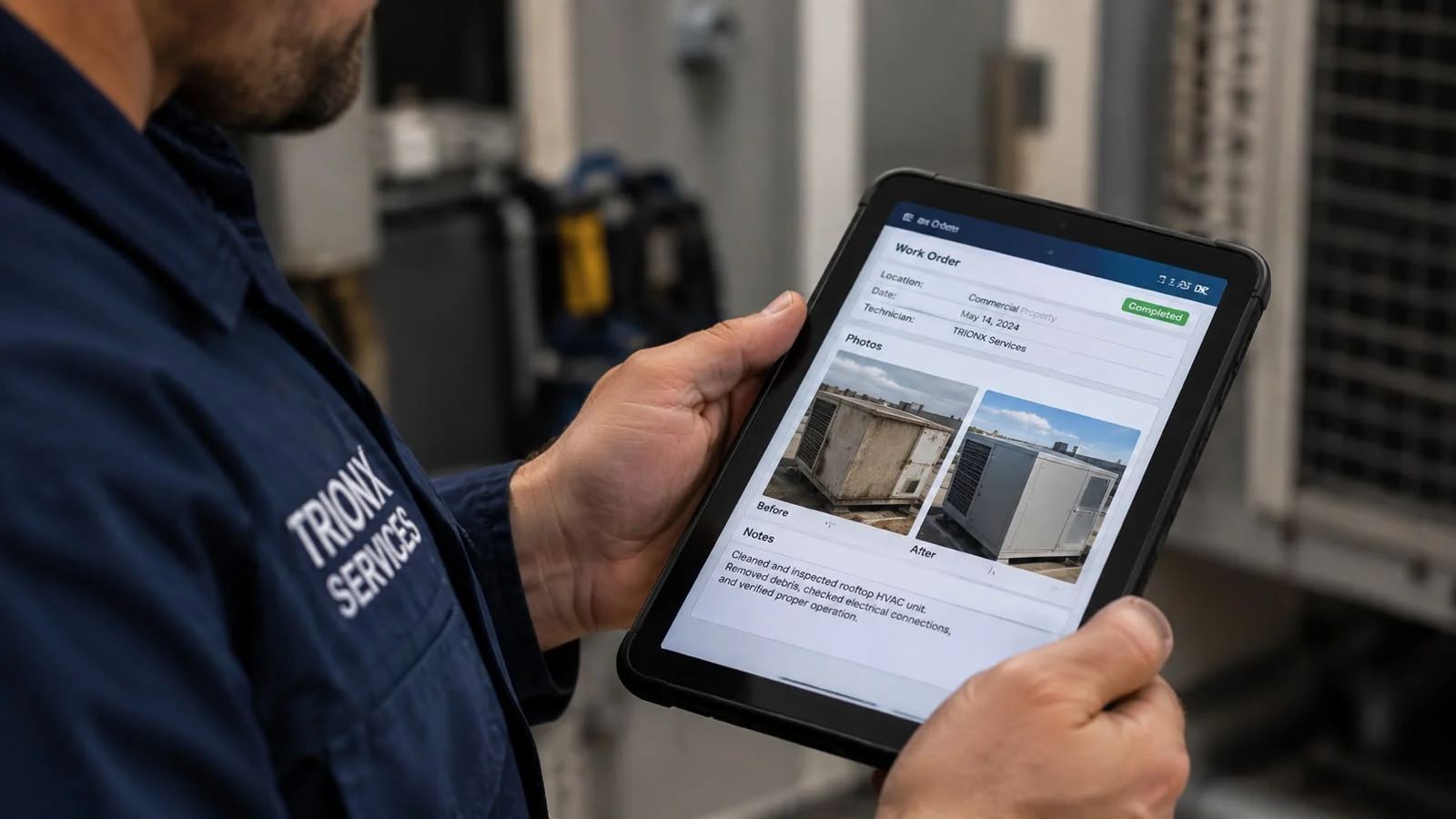
Storm damage becomes a claim, and claims are decided on evidence. What an adjuster wants to see is a clear before-and-after: the condition of the equipment prior to the storm, the damage after it, and what was done about it.
This is why we photograph everything on every visit, storm season or not. When a claim is filed six weeks after a storm, the pre-season inspection photographs from May are frequently the difference between a settled claim and a disputed one. They establish that the equipment was maintained, and that the storm caused the damage rather than neglect.
Keep the parts list too. "Replaced compressor" is far weaker evidence than a documented model and serial, the failure mode observed, and photographs of the failed component.
What to do now
If it is May, book the pre-season inspection. If it is mid-season and you have not had one, book it anyway. Most of the value sits in the coil, the seals and the condensate line, and those are worth attending to at any point in the year.
If a storm has just passed and your units are running, do not read that as the all-clear. Have the coils checked. That single step prevents the majority of the expensive failures we see in the weeks afterwards.
Keep reading
Related field notes
Need something looked at?
Tell us the property and the problem, and we will come back with a window.