

Locks
Card readers, keypads or keys: choosing access control
The question is rarely which technology is best. It is which one you can still administer in two years, when the person who set it up has left.
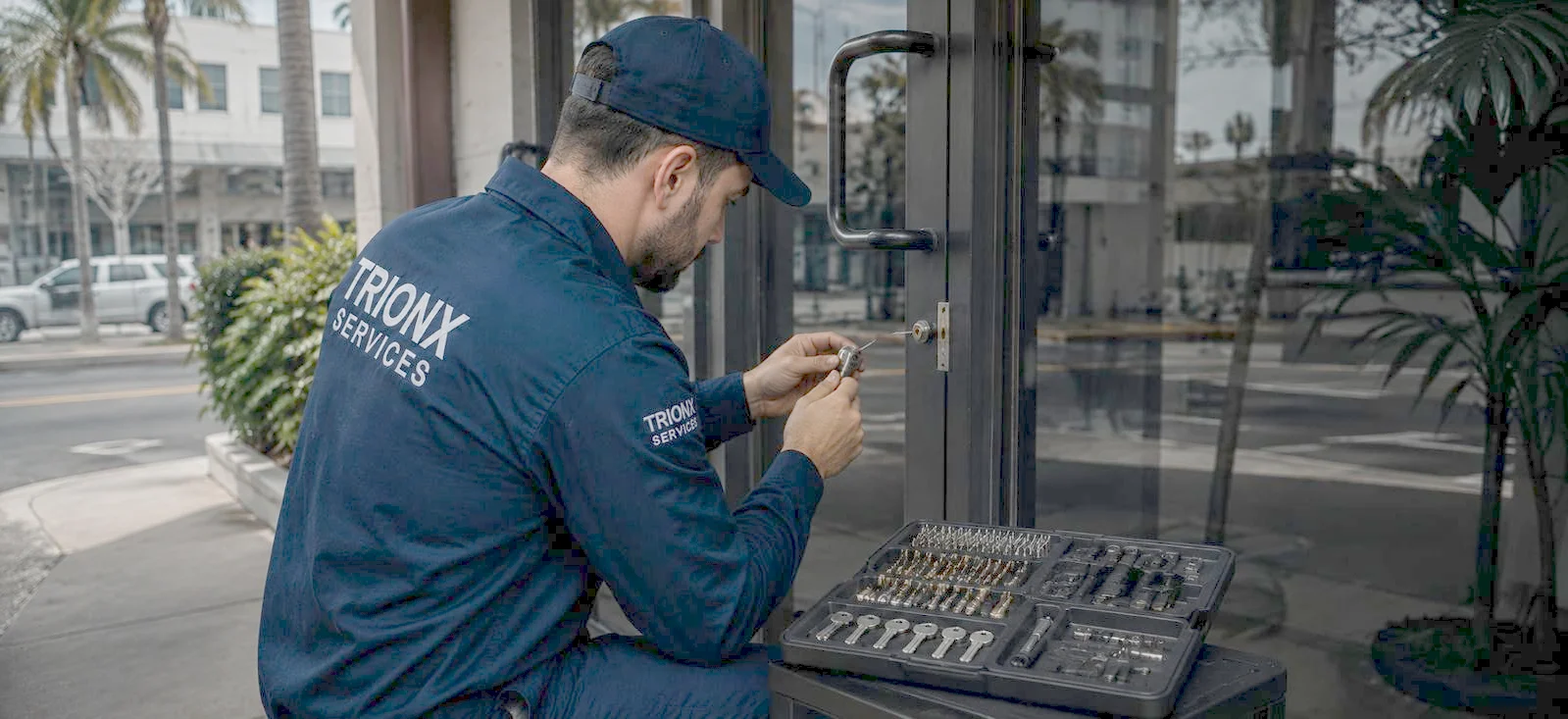
Access control gets chosen on capability and lived with on administration. A system that does everything and that nobody maintains ends up worse than a mechanical lock with a good key register, because at least the register tells you the truth.
Mechanical keys
Still the right answer on a large number of commercial doors, and the only option that works with no power, no network and nobody on site.
Where they win. Low door counts, stable occupancy, back-of-house doors, plant rooms, risers, cages and anywhere a credential would never realistically be issued. They cost nothing to run and they fail gracefully.
Where they lose. Frequent staff turnover. Every departure is either a rekey or a key you have decided to stop worrying about, and the second option is how most properties end up unable to say who can reach what.
The thing that decides it. Whether the keyway is controlled. On a standard keyway anyone can cut a copy at a hardware counter, so a rekey is temporary. On a restricted keyway blanks are supplied only to the registered holder, which makes key control real. If you are staying mechanical on doors that matter, this is where the money goes.
Keypads and code locks
A middle option that suits far more doors than it gets used on.
Where they win. Doors used by a group rather than by named individuals: a stockroom, a staff entrance, a gate, a shared amenity. No credentials to issue, no credentials to collect back, and changing access is a two-minute job on the door.
Where they lose. Anywhere you need to know who went through. A code is shared, and it will be shared. Codes also leak through wear: on a keypad used for a year, the four worn buttons narrow the guess considerably.
The thing that decides it. Whether you need attribution. If knowing who opened the door does not matter, a keypad removes an entire administrative burden. If it does matter, a keypad cannot give it to you at any price.
Card and fob readers
The default recommendation for anything with staff turnover and more than a handful of doors.
Where they win. Credentials are issued and revoked centrally, so a departure is a database change rather than a site visit. You get a record of who went through which door and when. Access can vary by person, by door and by time of day.
Where they lose. They need power, they usually need a network, and they need somebody whose job it is to administer them. A system where nobody has revoked a credential in eighteen months is worse than keys, because it produces a log that looks authoritative and is not.
The thing that decides it. Whether there is a named person who will own it. Not a department. A person.
Mobile credentials
Phone-based access is increasingly common and it removes the physical credential entirely, which removes the cost and the collection problem. It introduces a dependency on the phone, on an app and on the user having both, which on a site with contractors and temporary staff is a real friction rather than a theoretical one.
Worth considering for office and multi-family, harder to justify where a large proportion of the people needing access are transient.
The mixed system, which is what most properties should have
Very few commercial properties should be all one thing. A realistic arrangement on a mid-sized building looks like this:
- Readers on the main entrance, any controlled area and anywhere attribution matters.
- Keypads on group-use doors: stockrooms, staff entrances, gates, amenity spaces.
- Mechanical, on a restricted keyway on plant rooms, risers, roof access, cages and every low-traffic door where issuing a credential would be absurd.
- A single register covering all three, so there is one answer to who can reach what.
That last line is the one that gets skipped. A building with readers and a spreadsheet of codes and a drawer of keys has three access systems and no idea what its access position is.
What it costs to run, which is the part nobody quotes
Purchase price is the easy number. The running cost is where the difference shows.
Mechanical costs nothing monthly and costs a visit every time somebody leaves. Keypads cost nothing monthly and cost a code change and a communication. Readers cost a credential per person, possibly a software subscription, and the time of whoever administers it, but a departure costs sixty seconds.
For a property with stable occupancy, mechanical wins on total cost easily. For anything with regular turnover, readers overtake it faster than most people expect, and the crossover is usually somewhere around a departure a month.
Retrofitting without replacing everything
A common misconception is that access control means new doors. It usually does not. On most commercial openings the existing door and frame stay, and what changes is the lock, the strike and the reader.
The real constraints on a retrofit are the door construction, whether power and data can reach the opening, and whether the door is fire rated, because a rated assembly limits what can be fitted to it.
Where the licensing line falls, because it matters here
We fit, rehang and maintain reader hardware, keypads, electric strikes as hardware, door furniture and all mechanical locks, and we change codes and credentials. None of that requires a Florida contractor licence and it is performed by our own W-2 employees.
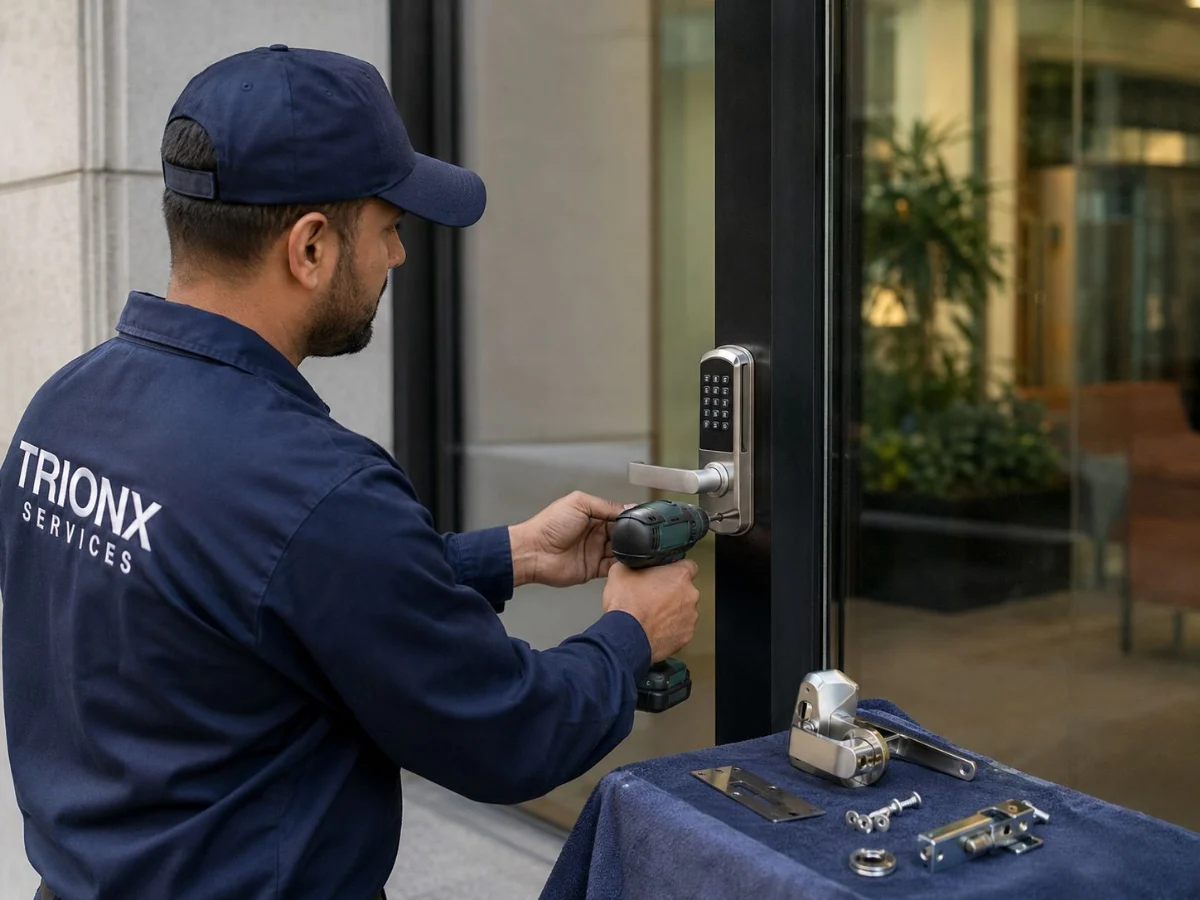
Anything involving wiring, power supplies, running cable or tying into a panel is electrical work under Florida law, at any job size. A licensed electrician carries that out and we coordinate it. On a reader installation that means the hardware is ours and the power is theirs, on the same visit, scoped together so you are not managing two vendors.
Being clear about that split before the job starts is what stops an access control project stalling halfway through.
Common questions
Questions we get asked about this
Should a small commercial property use keys or card readers?
Keys usually win on total cost where occupancy is stable, provided the keyway is restricted so copies cannot be cut at a hardware counter. Readers overtake them once departures reach roughly one a month, because revoking a credential takes a minute and a rekey takes a visit.
What is the drawback of keypad access?
You lose attribution. A code is shared and will be shared, so a keypad cannot tell you who went through the door. Codes also leak through wear, since the worn buttons on a year-old keypad narrow the guess considerably.
Does access control mean replacing our doors?
Usually not. On most commercial openings the door and frame stay and only the lock, strike and reader change. What genuinely constrains a retrofit is the door construction, whether power and data can reach the opening, and whether the door is fire rated.
Do you install access control yourselves?
We fit and maintain the reader hardware, keypads, strikes, door furniture and locks, and change codes and credentials, none of which needs a Florida contractor licence. Wiring, power supplies and panel connections are electrical work at any job size, so a licensed electrician does that part and we coordinate it.
Keep reading
Related field notes
Key control after an employee termination

Grease traps in a Miami commercial kitchen: what fails and why

Why your restaurant kitchen is too hot, and what make-up air has to do with it

Closing checklist for a retail storefront: locks, glass and lighting
Fail-safe or fail-secure: what your electric strike does in a power cut
One company, whoever does the work
Our technicians handle the trades that need no state licence, and licensed contractors handle the ones that do. Either way we scope it, book the visit and file the record. Tell us the property and the problem and we will come back with a window.